How Soon You Can Fly After Surgery
- Category: Plastic and Reconstructive Surgery, Surgery, Information
- Posted On:

Whether it’s a long-planned vacation, a business trip, or a visit with family, travel is an important part of life. But if you’ve recently had surgery, knowing when it’s safe to fly is essential for protecting your recovery.
Christopher Foster, MD, general surgeon at Oklahoma Surgical Associates, explains how different surgical procedures affect travel timelines, what risks to keep in mind, and how to fly safely when travel can’t wait.
Why Flying Too Soon After Surgery Can Be Risky
All surgeries come with a set of expected post-operative risks — such as pain, swelling, bleeding, and infection. Flying can add stress to the body during a time when it needs to heal.
“Flying increases the risk of dehydration and blood clots, especially in the legs,” explains Dr. Foster. “Sitting for long periods on a plane can slow circulation, which may increase the likelihood of a DVT (deep vein thrombosis).”
Key Risks When Flying Too Soon After Surgery:
- Blood clots (especially in legs)
- Dehydration
- Increased swelling or inflammation
- Worsening pain
- Difficulty accessing medical care if a complication occurs in transit
If travel is avoidable, your surgeon may recommend delaying it to allow your body more time to recover.
How Long After Surgery Can You Fly?
Recovery timelines vary based on the type of surgery performed.
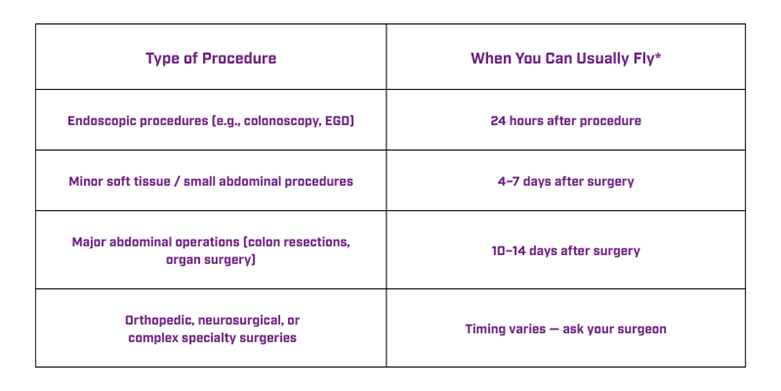
*These timelines are general guidelines and may vary based on your recovery, health history, and travel distance.
“Every patient’s situation is unique,” says Dr. Foster. “That’s why it's important to talk with your surgeon first.”
Warning Signs to Watch For During Recovery or Travel
It’s important to monitor your body closely — especially if you fly shortly after surgery.
Call your surgeon or seek care if you experience:
- Fever or chills
- Worsening or persistent pain
- Redness, heat, swelling, or drainage near the incision
- Shortness of breath or chest pain
- New or worsening swelling in the legs
“If something feels concerning to you, it’s concerning to your surgeon,” emphasizes Dr. Foster. “We want to hear from you.”
What to Discuss with Your Surgeon Before You Fly
Before you get on a plane, ask your surgeon:
- How long should I wait to travel safely?
- Are my medications safe to combine with alcohol while traveling?
- Do I need compression socks or blood clot prevention strategies?
- Are there lifting or activity restrictions I should follow?
- What should I do if symptoms appear mid-travel?
Travel Tips If You Must Fly Soon After Surgery
If travel is unavoidable:
- Stay well hydrated
- Avoid alcohol, especially if taking pain medication
- Walk or stand up every hour during the flight
- Wear compression stockings if recommended
- Stretch your legs and calf muscles regularly
“Movement and hydration are key to lowering blood clot risk,” says Dr. Foster.
Recover Safely — Support Is Here
If you've recently had surgery or have an upcoming procedure and travel is in your near future, the team at Oklahoma Surgical Associates is here to guide you.
Let us help you create a safe, personalized return-to-travel plan. Your recovery matters — and we’re here to support you through every step.