Gallbladder Risks with GLP-1 Medications
- Category: Educational
- Posted On:

GLP-1 medications such as Ozempic, Wegovy, Mounjaro, and Zepbound have changed the way providers manage diabetes and support weight loss. These medications help reduce appetite, stabilize blood sugar, and promote meaningful weight loss — often when diet and exercise alone have not been enough.
According to William Hinojosa, DO, a general surgeon with Oklahoma Surgical Associates, the benefits of GLP-1 medications are significant, but it’s important for patients to understand potential side effects, especially as their use becomes more widespread.
“These medications are fantastic and are really changing the management of both diabetes and weight loss,” Dr. Hinojosa said. “But like all great tools, you also need to understand the side effects — and one of the things we’re seeing more frequently is how they can affect the gallbladder when patients lose weight rapidly.”
What are GLP-1 Medications and how do they Affect the Gallbladder?
GLP-1 medications work in part by slowing digestion, which helps people feel full longer and reduces overall calorie intake. However, this same mechanism can also impact how the gallbladder functions.
Dr. Hinojosa describes this as a two-step process. “GLP-1s slow the digestive system down, and in doing so, they also decrease the motility of the gallbladder,” Dr. Hinojosa said. “That means the gallbladder empties less frequently and more slowly.”
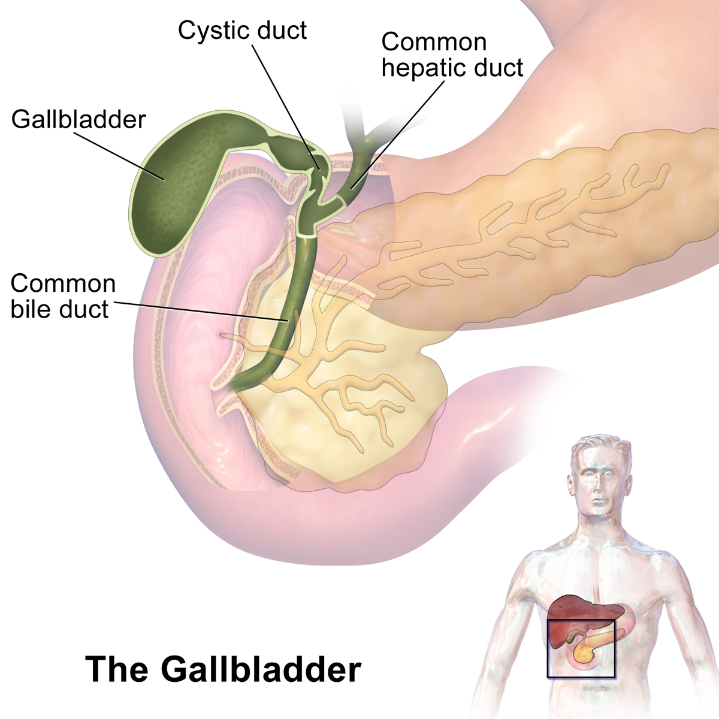
At the same time, rapid weight loss can change the composition of bile. “When patients lose weight quickly, the bile thickens,” Dr. Hinojosa explains. “Thicker bile can lead to gallbladder sludge, which can then turn into gallstones. When you combine thicker bile with a gallbladder that’s not emptying well, you start seeing more gallbladder attacks.”
What Symptoms Should You Watch For?
Gallbladder symptoms can vary, but they often follow a recognizable pattern. Dr. Hinojosa explains that most gallbladder attacks present as a sharp, stabbing pain beneath the right rib cage that may radiate to the right shoulder or the middle of the back. This pain is frequently accompanied by nausea, bloating, or vomiting, and sometimes changes in bowel habits.
Symptoms may include:
- Sharp pain under the right rib cage
- Pain radiating to the right shoulder or mid-back
- Nausea, bloating, or vomiting
- Fever accompanying abdominal pain
“What really raises concern is when that pain is associated with fevers,” Dr. Hinojosa says. “If you have right upper abdominal pain and develop a fever, that can signal acute cholecystitis — an infection or inflammation of the gallbladder — and that’s something that needs prompt evaluation.”
What Should You Do If You’re on a GLP-1 and Develop Symptoms?
Not all gallstones cause symptoms, and Dr. Hinojosa emphasizes that patients without symptoms typically do not need to stop their medication.
“Patients can have gallstones and never know it,” said Dr. Hinojosa. “If you’re asymptomatic, there’s no reason to stop your GLP-1 medication, even if gallstones are present.”
However, when symptoms do appear — especially pain or fever — action is important. “That’s when I recommend holding your next dose, reaching out to your primary care provider, and getting evaluated,” Dr. Hinojosa said. “Often that means imaging, like an ultrasound, to see if the gallbladder is the source of the problem.”
How Can You Reduce the Risk of Gallbladder Issues While on GLP-1s?
The biggest risk factor Dr. Hinojosa sees in patients on GLP-1 medications is rapid weight loss. Losing weight too quickly increases the likelihood of bile thickening and gallstone formation.
“When patients lose 15 to 20 percent of their body weight very quickly, that’s when we really start to see gallbladder problems,” he explains.
To reduce risk, Dr. Hinojosa recommends:
- Gradual dose increases as prescribed
- Slower, steady weight loss (around 1 pound per week)
- Regular meals with a balanced diet
- Avoiding extreme low-fat or very high-fat diets
“You don’t need to avoid fat completely, but you also don’t want to eat an extremely high-fat diet,” he says. “A normal, well-balanced diet goes a long way in protecting the gallbladder.”
When Is Gallbladder Surgery Considered?
Gallstones and gallbladder symptoms typically do not resolve on their own. In fact, Dr. Hinojosa notes that symptoms often worsen over time.
“When patients develop gallstones and start having symptoms, that’s usually the breaking point where we need to start talking about surgery,” he says. “If you’re asymptomatic, we don’t need to address the gallstones. But if pain is present, it’s something to seriously consider.”
Fortunately, gallbladder removal is a common and minimally invasive procedure. “Gallbladder surgery is typically done laparoscopically through a few small incisions,” Dr. Hinojosa explains. “It’s usually outpatient, and most patients are back to normal life within a few days.”
The Bigger Picture: Why Healthy Weight Loss Still Matters
Despite the potential gallbladder risks, Dr. Hinojosa emphasizes that GLP-1 medications remain an important and effective tool.
“These medications are highly effective, and we’re seeing patients lose weight, improve their health, and in some cases come off blood pressure or diabetes medications,” he says. “That benefit is huge.”
The key is awareness, moderation, and early evaluation of symptoms. “If you’re on a GLP-1 medication and start experiencing right upper abdominal pain,” Dr. Hinojosa advises, “reach out to your primary care provider and get checked. Early imaging can make all the difference.”
If you are interested in learning more about GLP-1 medications, learn more about medication-assisted weigh loss here.
If you are experiencing symptoms of gallbladder illness, give our office a call at 405-515-4099.