What Is an Endoscopy? Everything You Need to Know About Upper Endoscopy and Colonoscopy
- Category: Educational
- Posted On:
Digestive symptoms can range from a minor annoyance to a sign of something much more serious. When your provider needs a closer look at what's happening inside your digestive tract, an endoscopy is often the best tool for the job.
"Endoscopy simply means looking inside," says Chintan Parikh, MD, gastroenterologist with GI of Norman. "These procedures allow us to examine the digestive tract, diagnose conditions, take biopsies, and even treat certain problems without surgery."
If you've been told you need an endoscopy or colonoscopy, understanding what to expect can help ease anxiety and prepare you for the procedure.
What Is an Endoscopy?
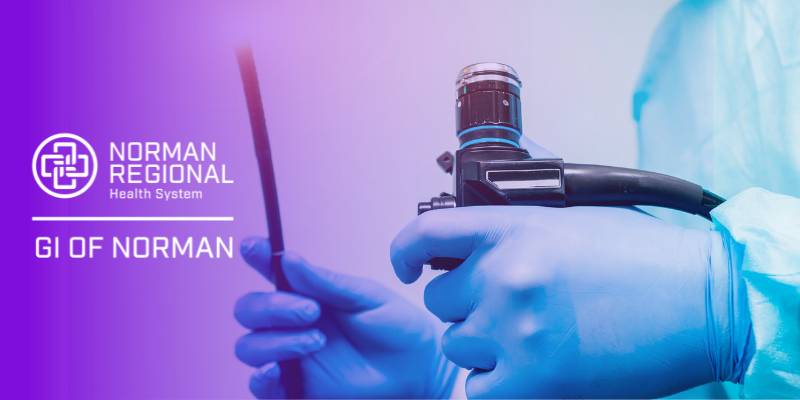
An endoscopy is a minimally invasive procedure that uses a thin, flexible tube equipped with a tiny camera to examine the digestive system. The live images appear on a monitor, allowing your gastroenterologist to identify inflammation, ulcers, polyps, bleeding, or other abnormalities.
"We can use different instruments through the endoscope to take biopsies or perform therapeutic procedures, such as treating gastrointestinal bleeding or removing polyps," Dr. Parikh said.
There are several types of endoscopic procedures, each designed to examine a different part of the digestive system:
- Upper endoscopy (EGD): Evaluates the esophagus, stomach, and first part of the small intestine.
- Colonoscopy: Examines the entire colon and rectum.
- Specialized small bowel endoscopy: Allows physicians to evaluate the small intestine, which is approximately 20 feet long.
- Endoscopic ultrasound and ERCP: Used to diagnose and treat conditions involving the pancreas and bile ducts.
Upper Endoscopy vs. Colonoscopy: What's the Difference?
Although both procedures use similar technology, they serve different purposes.
An upper endoscopy, also called an esophagogastroduodenoscopy (EGD), evaluates the upper digestive tract.
"With upper endoscopy, we can check the esophagus, stomach, and the top part of the small intestine," Dr. Parikh says.
A colonoscopy focuses on the lower digestive tract, allowing physicians to inspect the colon while also removing polyps, collecting tissue samples, or treating certain conditions during the same procedure.
Why Would Someone Need an Endoscopy?
An upper endoscopy helps diagnose a wide range of digestive conditions and symptoms, including:
- Persistent heartburn or acid reflux
- Difficulty swallowing
- Nausea and vomiting
- Upper abdominal pain
- Gastrointestinal bleeding
"It is very useful for evaluating symptoms like nausea, vomiting, heartburn, problems swallowing, and abdominal pain," Dr. Parikh said.
The procedure can identify conditions such as esophagitis, hiatal hernias, ulcers, narrowing of the esophagus, and sources of upper gastrointestinal bleeding. It can also be used to treat many of these conditions during the procedure itself.
For example, "we can treat bleeding ulcers with cauterization and clips, and we can stretch the esophagus when narrowing is causing swallowing problems," Dr. Parikh explains.
A colonoscopy is equally important, both for diagnosing symptoms and preventing disease. It may be recommended for:
- Colorectal cancer screening
- Rectal bleeding
- Chronic diarrhea
- Changes in bowel habits
- Evaluation of inflammatory bowel disease
When Should You Have an Upper Endoscopy?
Unlike colonoscopy, there is no routine age recommendation for upper endoscopy.
"If you have heartburn two to three times per week for more than five years, it's a good idea to get an endoscopy to rule out Barrett's esophagus," Dr. Parikh said.
Barrett's esophagus is a precancerous condition that can increase the risk of esophageal cancer. The risk is higher in people with long-standing reflux combined with obesity, tobacco use, or alcohol use.
Patients with liver cirrhosis may also need upper endoscopy screening because they can develop enlarged blood vessels in the esophagus that have the potential to bleed. "These can often be treated by applying rubber bands to the enlarged vessels before they cause significant problems," Dr. Parikh said.
People with a family history of stomach cancer or other significant risk factors may also benefit from screening, even though stomach cancer is relatively uncommon in the United States.
What Does Endoscopy Preparation Look Like?
Preparation depends on the type of procedure you're having.
For an upper endoscopy, preparation is fairly straightforward. Patients are usually asked not to eat or drink after midnight and may take certain medications with a small sip of water several hours before the procedure.
"If patients are taking blood thinners or semaglutide medications for weight loss, those often need to be stopped ahead of time," Dr. Parikh said.
Colonoscopy preparation requires a more thorough cleaning of the colon.
Patients follow a clear liquid diet and take a prescribed bowel preparation. While older preparations required drinking a gallon of liquid, Dr. Parikh said today's options are much more manageable.
"There are low-volume liquid preparations and even pill-based preps that are much easier for patients to take."
Your physician will also provide specific instructions regarding blood thinners and medications such as semaglutide.
What Happens During an Endoscopy?
Most patients receive sedation and remain comfortable throughout the procedure.
"In our country, upper endoscopy is done with sedation, and most patients don't feel anything," Dr. Parikh said.
An upper endoscopy typically takes between five and ten minutes. Patients recover for about 30 minutes before going home.
Colonoscopy is also performed under sedation. One improvement many patients appreciate is the use of carbon dioxide instead of air during the procedure.
"In the past, some patients experienced significant gas and cramping afterward because we used air," Dr. Parikh said. "These days we use carbon dioxide, which is absorbed back into the bloodstream, so most people have very little discomfort."
After either procedure, patients should plan to rest for the remainder of the day. Driving and making important legal or financial decisions should wait until the following day.
Is Endoscopy Safe?
Endoscopy is a very safe procedure, although every medical procedure carries some degree of risk.
"There can be bleeding or perforation, and there can be side effects from anesthesia, but the risks are quite low, usually around one in one thousand cases," Dr. Parikh said.
The likelihood of complications may be slightly higher when larger polyps are removed or therapeutic procedures are performed.
Following a colonoscopy, bleeding can occasionally occur for up to three weeks after large polyp removal. Depending on the situation, your physician may recommend temporarily avoiding medications such as ibuprofen or Aleve and extending the pause on blood thinners if your cardiologist agrees.
Why Colonoscopy Is One of the Best Cancer Prevention Tools
Colonoscopy is unique because it doesn't just detect cancer. It helps prevent it.
"Most colon cancers start from a polyp," Dr. Parikh said. "If we find the polyp and remove it, we can prevent colon cancer."
Not every polyp becomes cancerous, but certain types have a higher risk. Every polyp that is removed is sent to pathology for evaluation.
The timing of your next colonoscopy depends on the number, size, and type of polyps found. Some patients may return in three to five years, while those with very large polyps removed in pieces may need another colonoscopy in about one year to confirm that polyp has been removed completely and there is no recurrence
How Often Should You Have an Endoscopy?
Follow-up endoscopy depends on the condition being treated.
Patients with stomach ulcers often have another upper endoscopy after about three months to confirm healing and ensure an underlying cancer is not present.
People diagnosed with eosinophilic esophagitis, an allergic inflammatory condition that commonly affects younger patients and causes difficulty swallowing, typically undergo repeat endoscopy three to four months after treatment begins.
Colonoscopy is also an essential tool for monitoring inflammatory bowel diseases such as Crohn's disease and ulcerative colitis.
"We repeat colonoscopy after patients start appropriate medication to confirm that the inflammation has healed," Dr. Parikh said.
Patients with long-standing ulcerative colitis or Crohn’s disease involving the entire colon have an increased risk of colon cancer and often require regular surveillance colonoscopies with multiple biopsies.
When to Talk to Your Doctor
Digestive symptoms should never be ignored, especially when they become persistent or severe.
"If you're developing significant abdominal pain, difficulty swallowing, vomiting blood, blood in the stool or black stools, or unexplained weight loss, speak to your doctor to find out whether you need an endoscopy," Dr. Parikh said.
An endoscopy is often the quickest and most effective way to find answers, begin treatment, and in many cases, prevent serious digestive diseases before they become bigger problems.
To schedule or learn more about an endoscopy, call GI of Norman at 405-515-2777.