Getting to the Root of Nerve and Muscle Pain with EMG Testing
- Category: Educational
- Posted On:

You've been dealing with it for weeks — maybe months. A strange tingling in your hands. Weakness that wasn't there before. Numbness that comes and goes, or pain that your doctor hasn't been able to fully explain. You know something isn't right, but getting to the bottom of it has felt like chasing a moving target.
If that sounds familiar, an electromyography (EMG) test might be exactly what your care team needs to move forward.
What Is an EMG Test, Exactly?
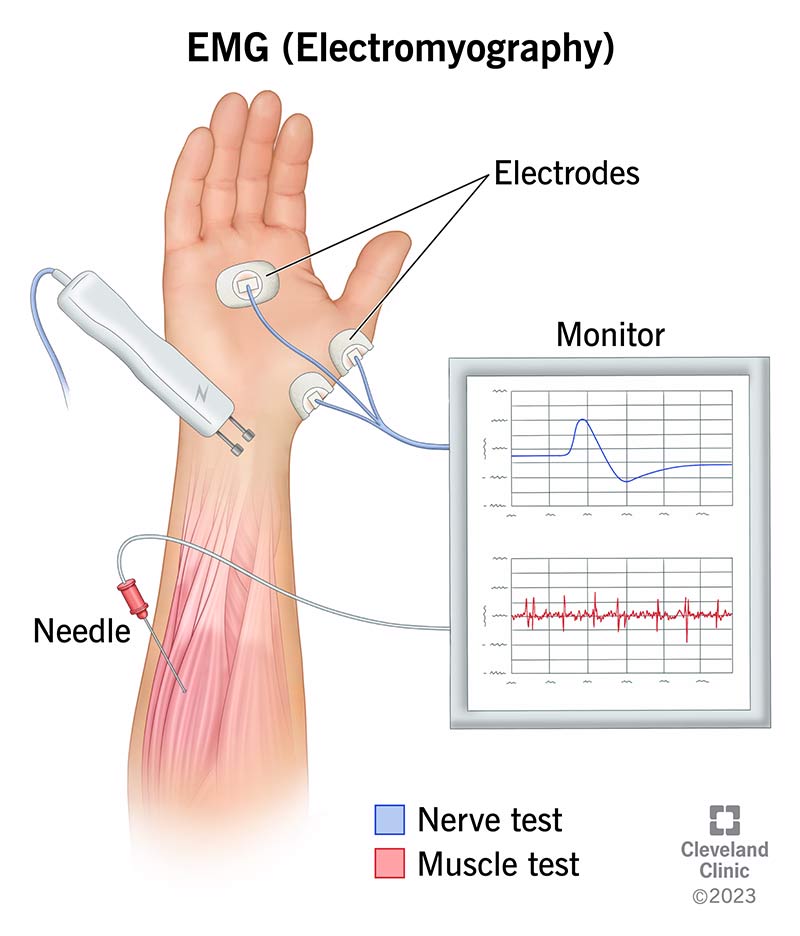
Electromyography is a diagnostic test that measures the electrical activity in your muscles and nerves. Think of it as a way of listening to the signals your nervous system sends — and detecting where those signals might be getting interrupted, misdirected, or weakened.
Your muscles and nerves communicate through electrical impulses. When something disrupts that communication — whether it's a compressed nerve, a disease affecting the peripheral nervous system, or a muscle disorder — an EMG can detect the disruption and help your doctor pinpoint the source.
That precision matters. Without it, treatment is often a process of educated guessing. With it, your care team can move directly toward a targeted plan.
What Conditions Can an EMG Detect?
EMG testing is particularly useful for identifying:
- Pinched nerves and carpal tunnel syndrome — common culprits behind hand, wrist, and arm discomfort
- Peripheral neuropathy — nerve damage that often causes burning, tingling, or numbness, especially in the hands and feet
- Radiculopathy — nerve pain originating from the spine, often felt as radiating pain down the arm or leg
- Muscle disorders and unexplained weakness
- Unexplained numbness or tingling that hasn't been explained by other testing
These are symptoms that tend to be dismissed, misattributed, or difficult to diagnose through imaging alone. An EMG adds a layer of information that other tests simply can't provide.
What to Expect at Your Appointment
EMG testing is performed right in the office and typically takes between 30 and 60 minutes. There's no hospital stay, no lengthy prep, and no significant recovery time.
During the test, your provider will place small electrodes on the skin or use a fine needle to measure electrical activity in specific muscles. It's a careful, methodical process — and your provider will walk you through each step and discuss the results with you so you leave with a clearer picture of what's going on and what comes next.
Where to Go for EMG Testing in Norman
Norman Regional Neurology Associates and the Oklahoma Headache Center — both located at 2821 36th Ave. N.W. in Norman — offer EMG testing for patients experiencing nerve and muscle symptoms. EMG is covered by most major insurance plans, though a physician referral is often required.
Living with unexplained symptoms is exhausting. An EMG won't just identify a problem — it gives your care team the information they need to do something about it. Talk to your doctor about whether an EMG makes sense for you or schedule your EMG by calling 405-307-5700.

.png)