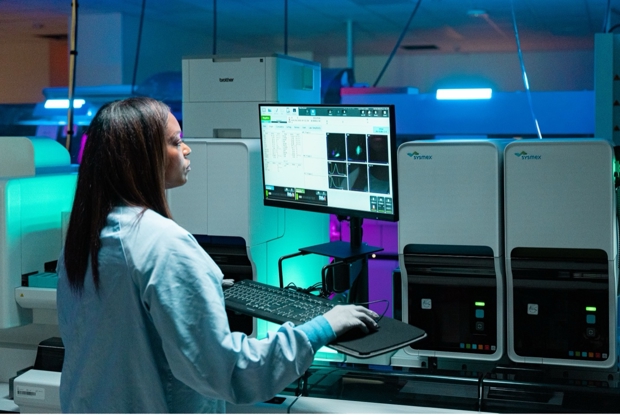
How a Routine Lung Scan Detected Cancer Early for a Patient
- Category: Educational
- Posted On:

Annual lung cancer screenings, advanced diagnostic technology and a collaborative care team helped Gayle Davenport uncover serious health concerns and take the next step in her care.
This National Lung Cancer Awareness Month, we’re sharing the story of Gayle Davenport – a strong and determined patient whose life may have been saved by a routine lung scan.
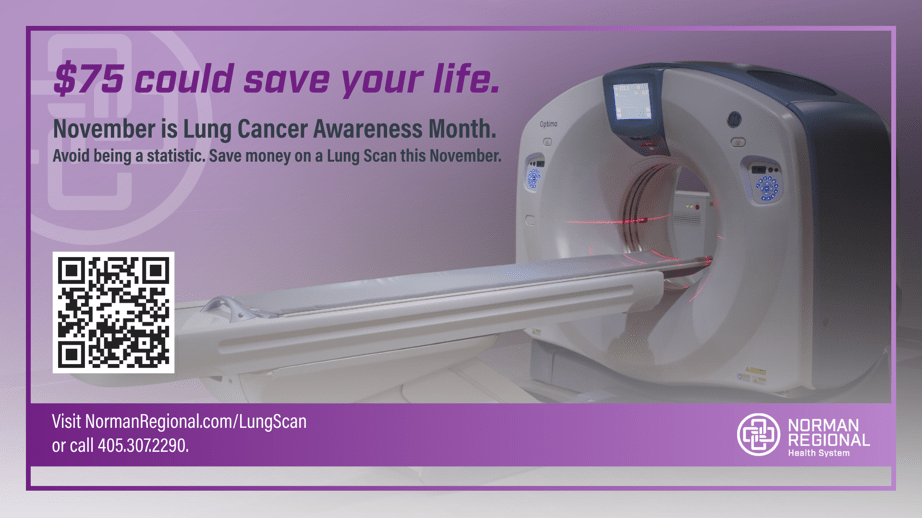
Related Blog: Screening and Prevention with $75 Lung Scans: Lung Cancer Awareness Month
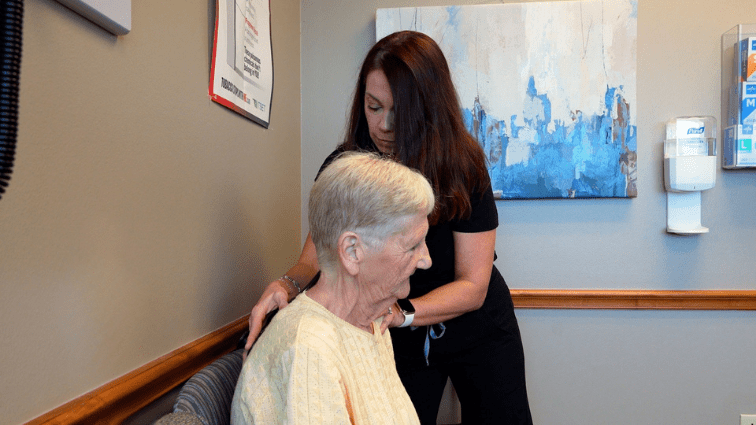
Davenport receives care at Norman Regional Pulmonary Clinic to manage her chronic obstructive pulmonary disease (COPD) and emphysema. As an on-again-off-again smoker, part of her care includes receiving annual computed tomography (CT) scans to monitor her lung health.
Related Blog: Raising Awareness for Lung Cancer and COPD in Oklahoma: Screenings, Prevention and Key Stats
Monica Lawson, APRN-CNP, Davenport’s pulmonary practitioner, noticed an area of concern in the results of one of her routine lung cancer screenings. “I thought it was a little dot,” said Davenport. “I didn’t know what it was.” That dot on Davenport’s lung scan results turned out to be a lung nodule.
Why Routine Lung Cancer Screening Matters
Since Davenport’s yearly CT scan revealed a spot on her lung, Lawson ordered a positron emission tomography (PET) scan to investigate it further. She worked with Sergio Garcia, MD, FCCP, physician at Norman Regional Pulmonary Clinic, to review the results.
Lawson enjoys collaborating with Dr. Garcia for the benefit of their patients. “It’s probably the best working relationship I’ve ever had in my 30-year career,” Lawson said. “It’s really great. It works well for us, professionally, but it’s also really good for the patients.”
The additional PET imaging revealed concerning spots on the left and right sides of Davenport’s thyroid, spots on both lungs and an area in her colon that was confirmed to be cancer.
Davenport underwent surgery at Norman Regional Hospital with Rahal Y. Kahanda, MD, of the Norman Regional Digestive Health Center to remove the cancer in her colon, and Lawson continued to monitor the nodules in her lungs.
Over time, one of the lung nodules changed. “On her most recent CT scan, we noticed that nodule had gotten a little bit bigger, a little more solid,” said Lawson. “So, I brought Dr. Garcia in to look at that, and he decided to take her [as a patient] for bronchoscopy.”
Related Blog: Revolutionizing Lung Cancer Diagnosis with Ion
During Davenport’s bronchoscopy with Dr. Garcia, the team used robotic-assisted technology to obtain a biopsy. The results confirmed lung cancer in the upper chamber of Davenport’s right lung. “Lung Cancer is no joke,” said Davenport. “When [Dr. Garcia] did the biopsy, he used robotics, which I’m glad that he is trained in robotic things.”
Without routine imaging and continued monitoring, Davenport’s developing lung cancer might have gone undetected. “Finding these things early, that’s the key to survival,” said Lawson.
Davenport credits Lawson for saving her life by catching the cancer and concerning spots throughout her body. “If it had not been for her, I really credit her with saving my life, because I would still be sitting here without any knowledge of having cancer anywhere,” said Davenport. “So, any of those preventive measures, do them right away. Don’t put them off like I did.”
Davenport’s experience illustrates why recommended lung cancer screenings and follow-up appointments are important, particularly for people with an increased risk of developing cancer.
Smoking Cessation Is an Important Step for Lung Health
Following her lung cancer diagnosis, Davenport shared, “I’m going to fight,” and said that she grew up in a smoking home and she herself smoked for more than five decades and was able to quit, but is back to smoking again.
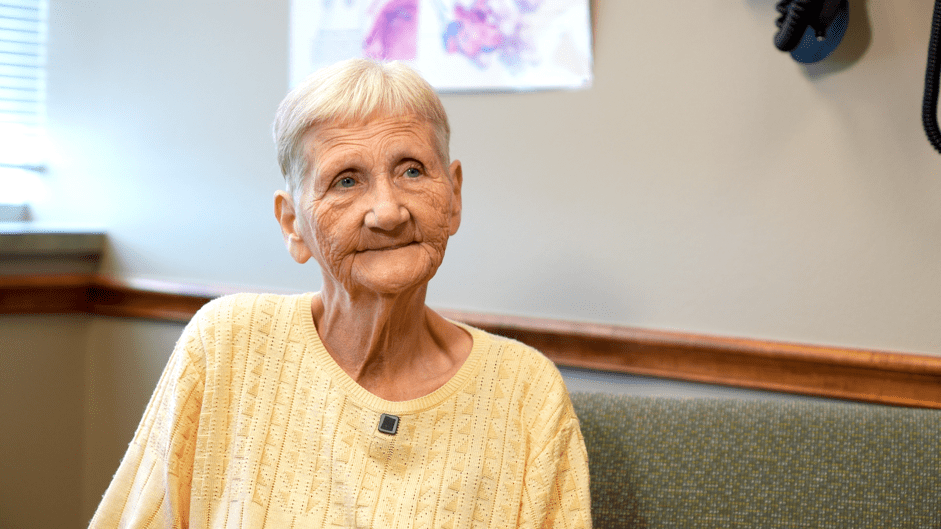
She expressed a renewed commitment to quitting permanently. “I’m going to try my hardest to be done [smoking] permanently,” said Davenport. “I know what I’m facing, so it does me no good to get all the treatments and still smoke.”
Quitting smoking is one of the most important steps a person can take to improve their health. “If you’re smoking, please stop,” said Lawson. “It’s probably one of the worst things that you could do for your health.” Although quitting can be challenging, support and resources are available to help people make lasting changes.
People who currently smoke or have smoked in the past should talk with their doctor about their lung cancer risk and whether they qualify for a lung scan. Screening recommendations depend on factors such as age and smoking history.
Advanced Technology and Teamwork at Norman Regional Pulmonary Clinic
For Davenport, a lung cancer diagnosis brought uncertainty, but the support of her care team at Norman Regional Pulmonary Clinic helped her approach the situation with a sense of understanding and hope. “I have some work to do,” said Davenport. “I’m clear-eyed about it, but Dr. Garcia was really [the] key to making me understand in a normal way…all the benefits and risks that helped me make my decision, and they were the right decisions. He guided me in the right direction.”
Lawson and Dr. Garcia worked together to review imaging, evaluate changes in the lung nodule, determine the appropriate next steps and communicate Davenport’s options to her. Their collaboration helped guide Davenport through additional testing and a diagnosis, and making informed decisions about her treatment plan.
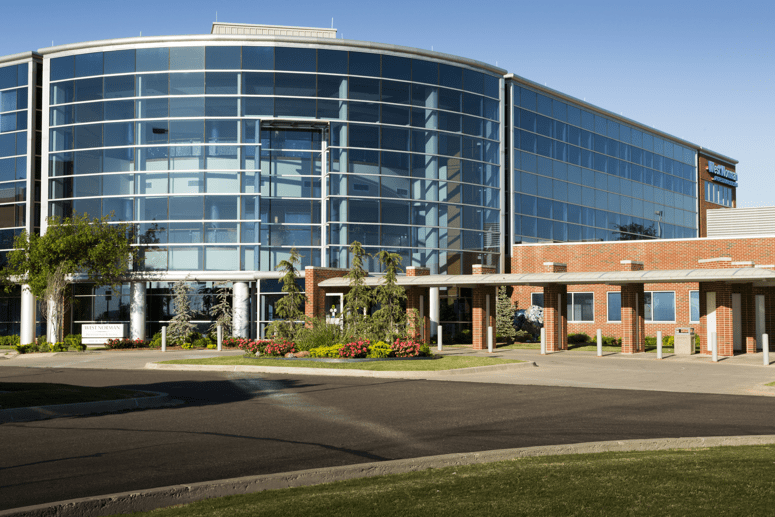
“We have a great clinic,” said Lawson. “I think everybody works well together, and we care a great deal about our patients. We see it as a great privilege to take care of these people – they trust us.”
Davenport expressed confidence in the team caring for her and their plan for her lung cancer treatment. “I’m feeling pretty confident on what we can succeed here,” said Davenport.
Helping patients understand their options, coordinating their lung care and guiding them through complex health concerns is an important part of the approach to care at Norman Regional Pulmonary Clinic.
Davenport’s care involved more than a series of scans and procedures. It also depended on communication and collaboration among her healthcare team. That combination of advanced diagnostic capabilities, physician and practitioner collaboration and clear communication helped Davenport navigate an unexpected diagnosis.
Davenport’s story is a timely reminder during Lung Cancer Awareness Month to not put off recommended screenings or follow-up appointments when it comes to addressing your health.
To contact Norman Regional's Pulmonary Clinic, call 405-515-4888. For information about a low-dose CT lung cancer screening, call 405-307-2290.
.png)