Norman Regional Outpatient Therapy Patient Getting Back to Doing Kid Things
- Category: News, Community Connection, Educational, Information
- Posted On:

Thirteen months ago, 11-year-old Amelia Chastain suffered a life threatening stroke caused by an arteriovenous malformation (AVM), an abnormally formed cluster of blood vessels that causes unusually high blood flow directly into veins, making them prone to rupture. October is AVM Awareness Month and the Chastain family wanted to take this opportunity to tell Amelia’s story and bring awareness to AVM and pediatric strokes.
While reflecting on the last thirteen months, Rachel Chastain, Amelia’s mother said, “You sometimes take things in life for granted and then when you can’t do them for a period of time and see your daughter overcome that, it makes you thankful for the little things in life. It gives you this perspective that you never asked for, but you have it and it benefits you.”
Amelia’s Stroke
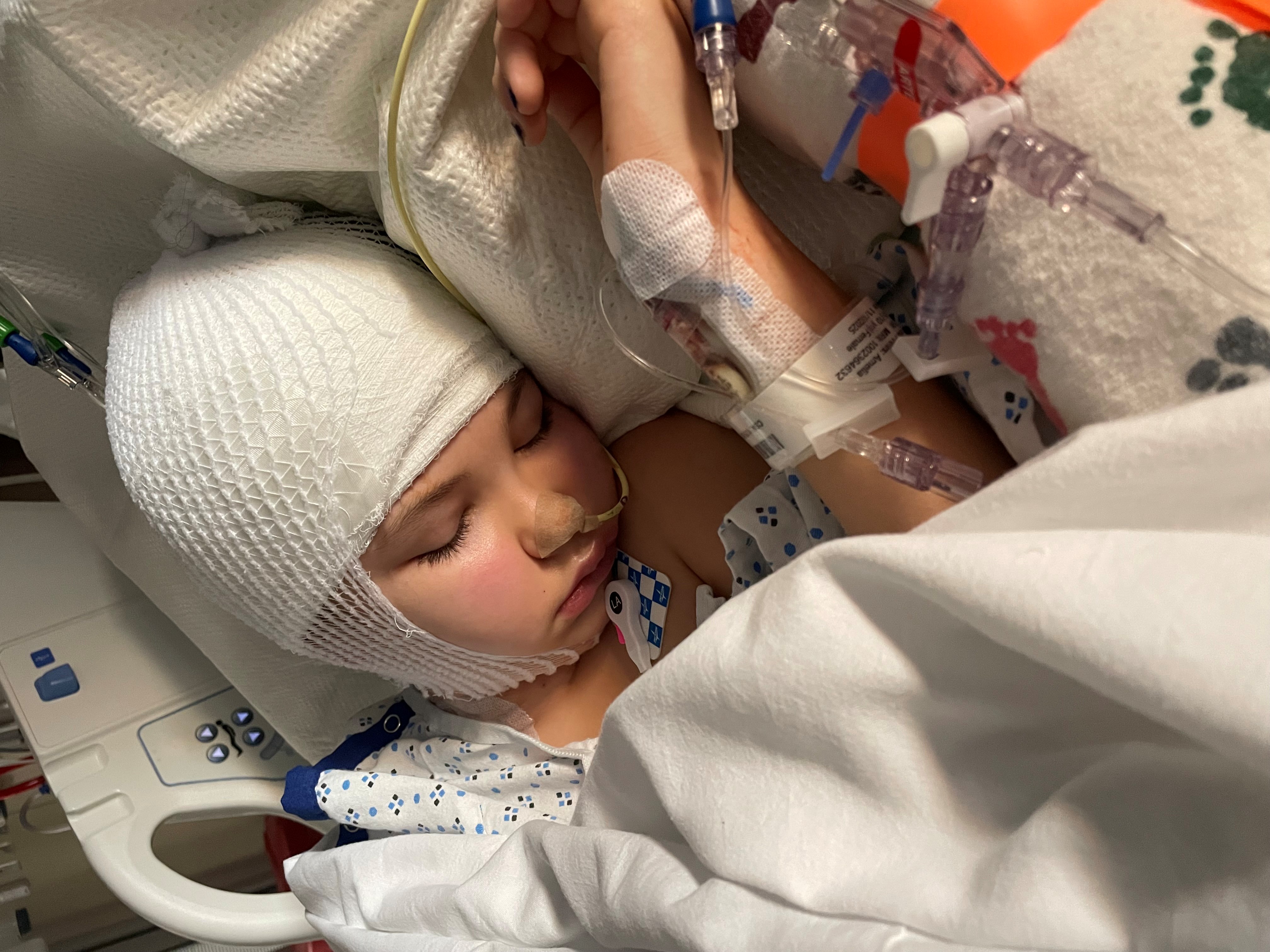
The night of Amelia’s stroke, she woke up her mom saying she had a headache. “September 27, 2025 in the middle of the night, Amelia woke me up complaining of a headache. I started to notice her eyes had this abnormal movement to them and soon after, she wasn’t responding at all,” Rachel said. “I told my husband to call 911 and when EMSSTAT arrived, they realized quickly that this was something serious.”
EMSSTAT rushed Amelia to the hospital where it was discovered she needed emergency brain surgery to stop the bleeding. Eventually, she needed a second surgery to remove the AVM and during that surgery, she had a permanent feeding tube placed.
“Her AVM was located in her right cerebellar area. Because of that, she wasn’t able to speak or swallow and would require intensive rehab,” Rachel said.
Amelia’s Road to Recovery
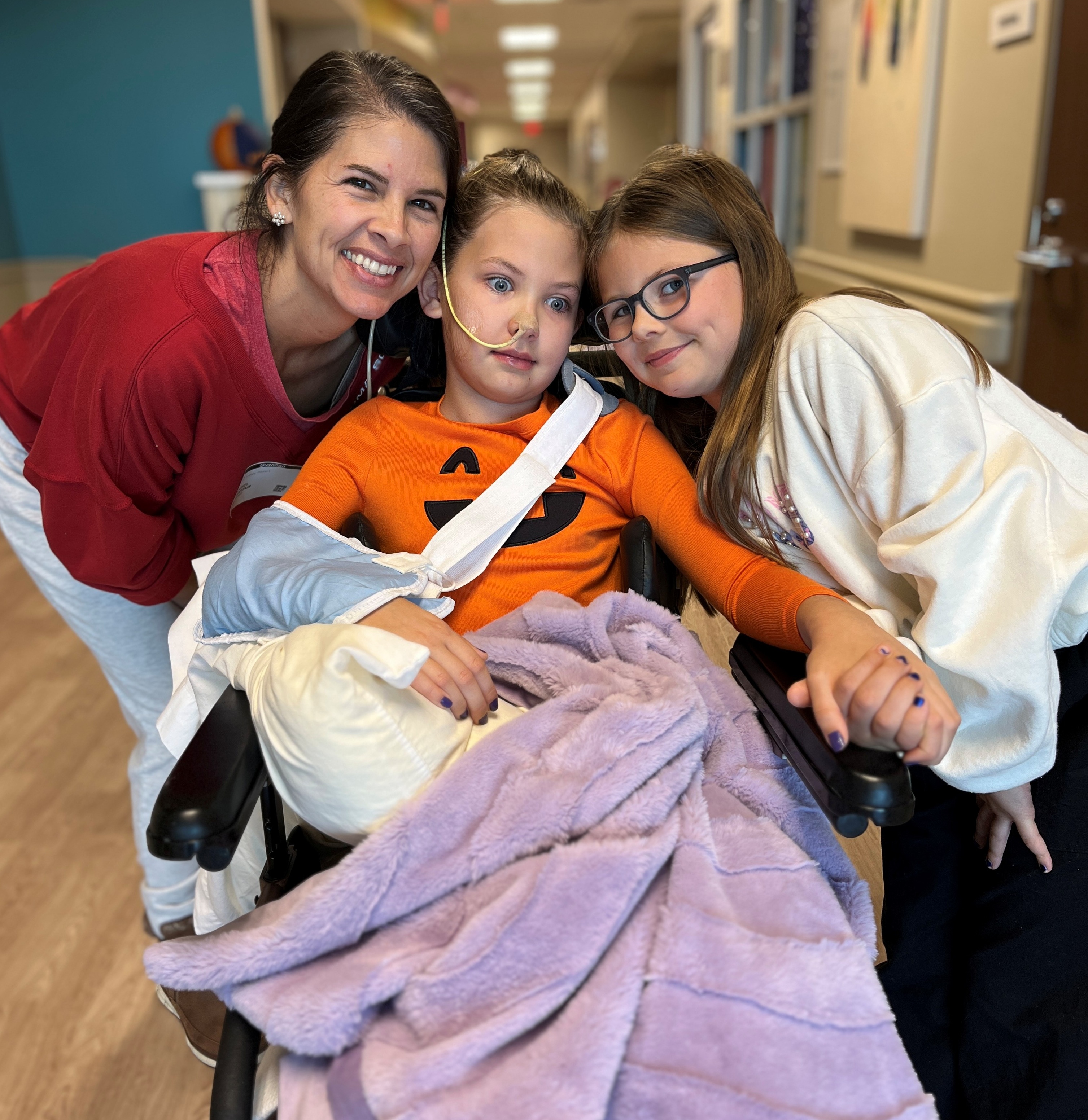
Shortly after January 1, 2026, while still hospitalized, Amelia began to making significant progress in her rehabilitation. Rachel said, “She spoke her first words, ‘I love you,’ and was able to get up and move around a bit.”
As Amelia continued to make progress healing in the hospital, talks of her going home were beginning to happen. “Around the middle of February, they started talking to us about Amelia doing well enough to come home, and on March 10, we did,” said Rachel.
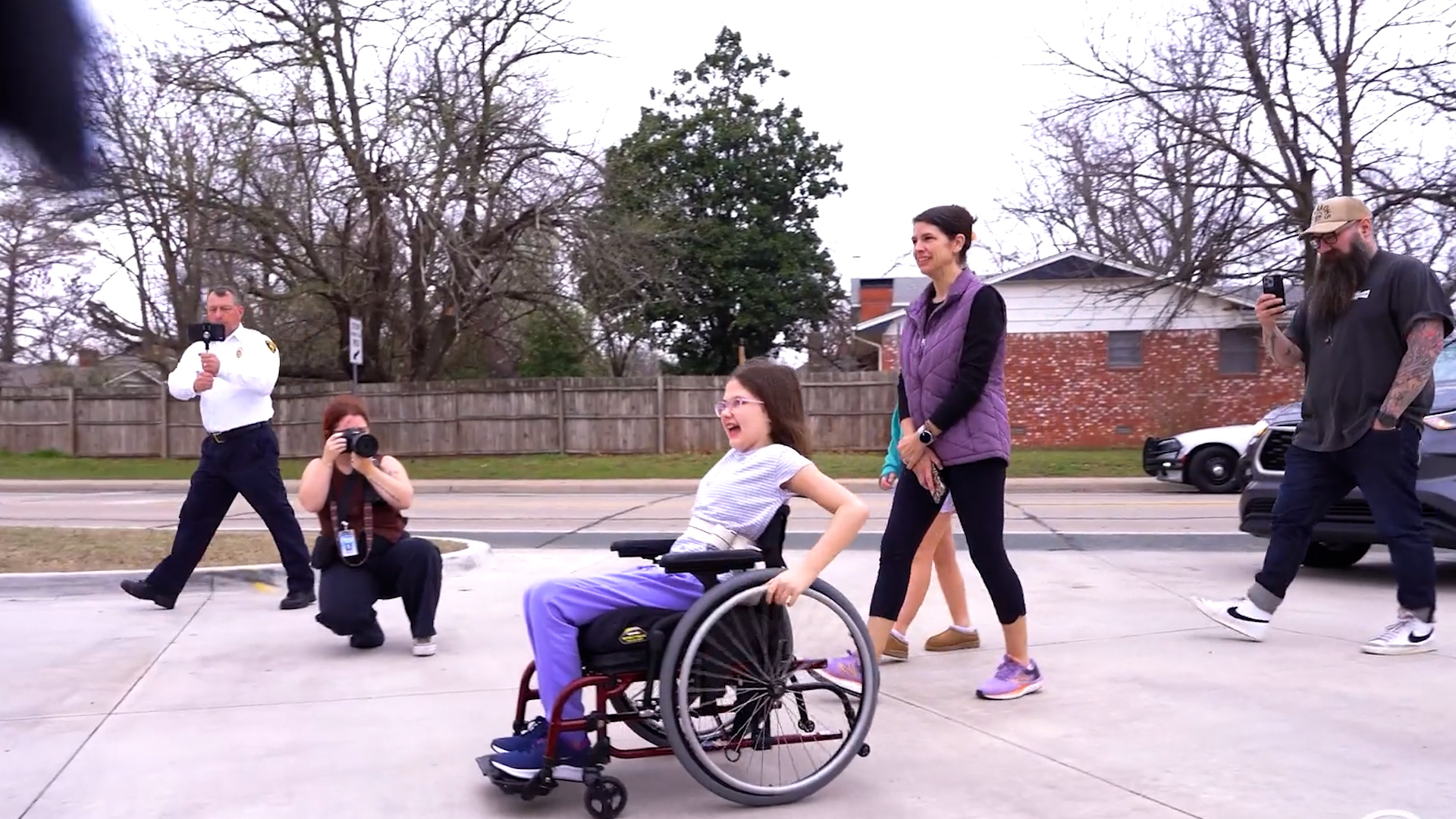
Amelia’s classmates and first responders held a parade to welcome her home from the hospital. “We had an epic homecoming parade in front of her school, greeted by Norman Regional EMSSTAT, the same people who picked her up the night of her stroke,” said Rachel. “It was really sweet, but Amelia still had this really big journey ahead of her. That same week she came home, we came to Norman Regional Outpatient Rehab.”
WATCH: Norman Regional EMSSTAT Brings Amelia Home
In March, Amelia began physical, occupational and speech therapy three times a week at the outpatient rehab clinic at Norman Regional Moore Physical Therapy. Her physical therapist, Hailey Blevins, DPT began working with Amelia on typical strengthening exercises.
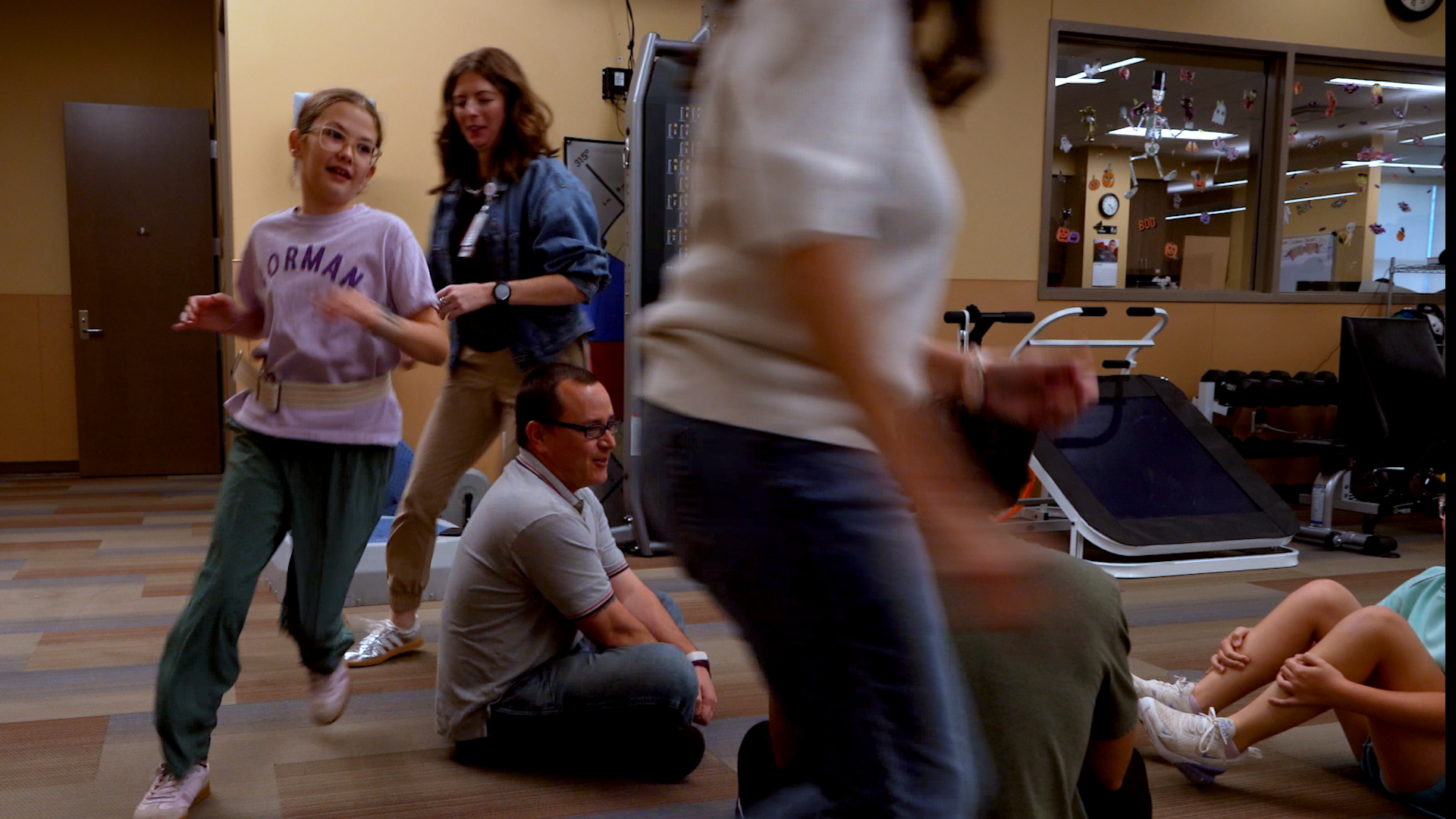
Amelia has made great progress with her physical therapist. “When Amelia first came to me, she was in a wheelchair. She was able to do some walking with assistance for short distances,” Blevins said. “Because of this, her therapy originally looked more like typical physical therapy. Now she’s able to walk and run and has transitioned into a lot more functional based stuff during her therapy sessions.”
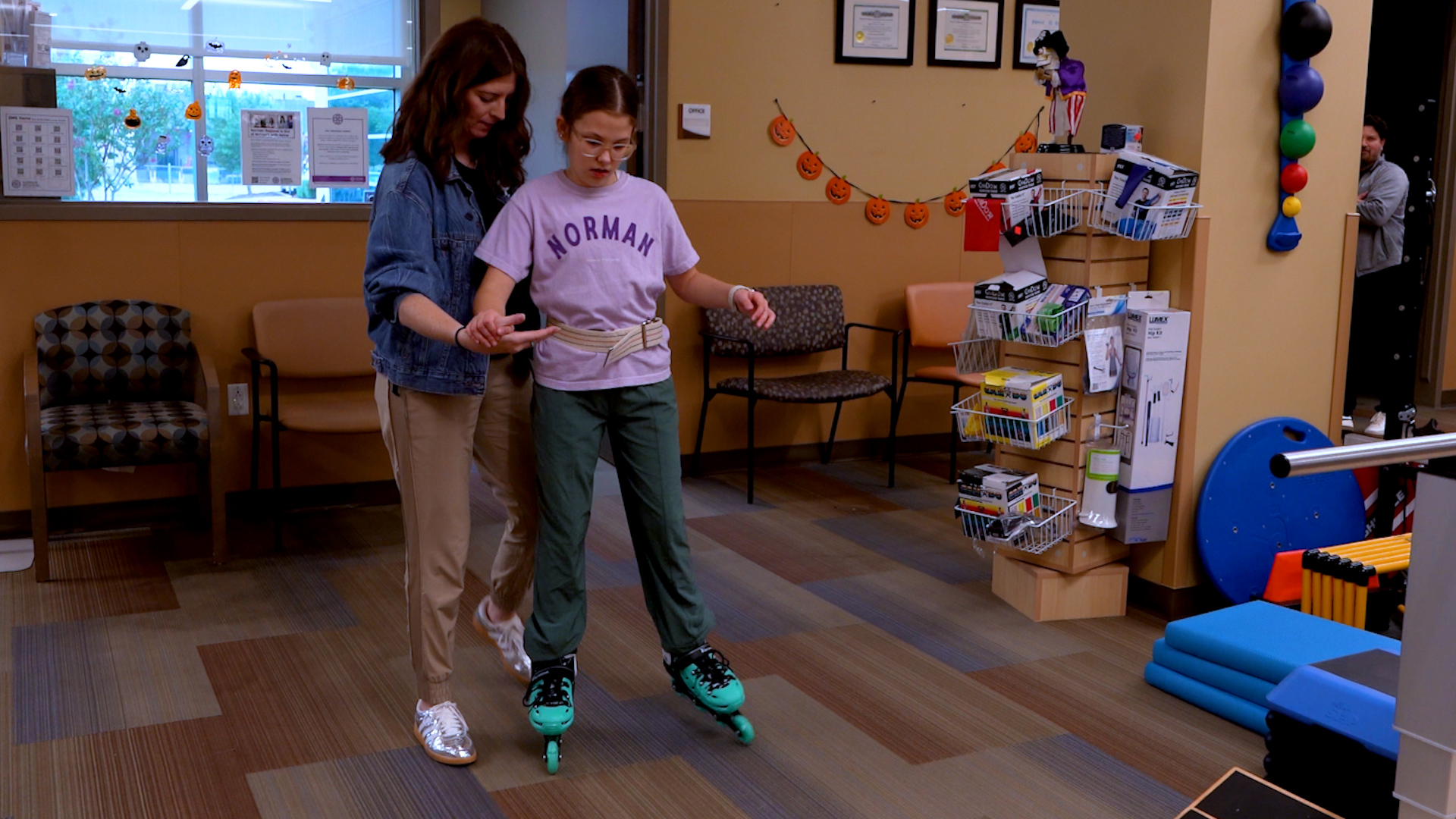
From the beginning, Amelia had one goal in mind: getting back to being a kid again. “For me, I wanted to get back to what I used to do every single day before my stroke. Getting back to walking, running and all the activities,” Amelia said. “I think I’ve gotten better a lot quicker than most anyone else would that’s been through what I have.”
Amelia’s parents could not be more proud of their daughter and the way she has handled this scary situation. “Amelia is resilient, she’s a fighter and she’s so hardworking. You always think as a parent you’re supposed to be the inspiring and encouraging one and it’s the opposite in this case,” Rachel said. “I love coming across people that don’t see us every day because they’re like, ‘Wow! She’s a totally different kid!’”
A Personalized Touch to Enhance Results
Once Amelia regained her functional basics, it was time for her therapy sessions to get more creative and fun. Rachel said, “What I love about Hailey is she asks really intentional and pointed questions like, ‘What’s something hard for you to do that you want to get back to doing?’ She sees the kid in Amelia.”
Amelia appreciates Hailey and has grown close to her during her care. “Hailey is not only a therapist to me, but she is a really good mentor and friend. She has been there for me, supporting me and I think that is the key to being a great therapist and friend,” said Amelia.
Hailey credits the Norman Regional Health Foundation for granting her and other therapists training that furthered their education when it comes to treating patients.
“I went through some training for older adults and fall prevention. If you talk to an older adult, they are fearful of getting on the ground. A lot of the new research shows the importance of getting on the ground and practicing getting up from a fall,” Blevins said. “A lot of patients’ hesitancy and reservation with doing new things stems from fear. Being able to try something new in an environment like this helps make the patient feel safer to attempt it for the first time. Amelia had tried Duck, Duck, Goose the other day and didn’t feel comfortable with getting up off the ground and pivoting to run, so we made it a game that we worked on in therapy.”
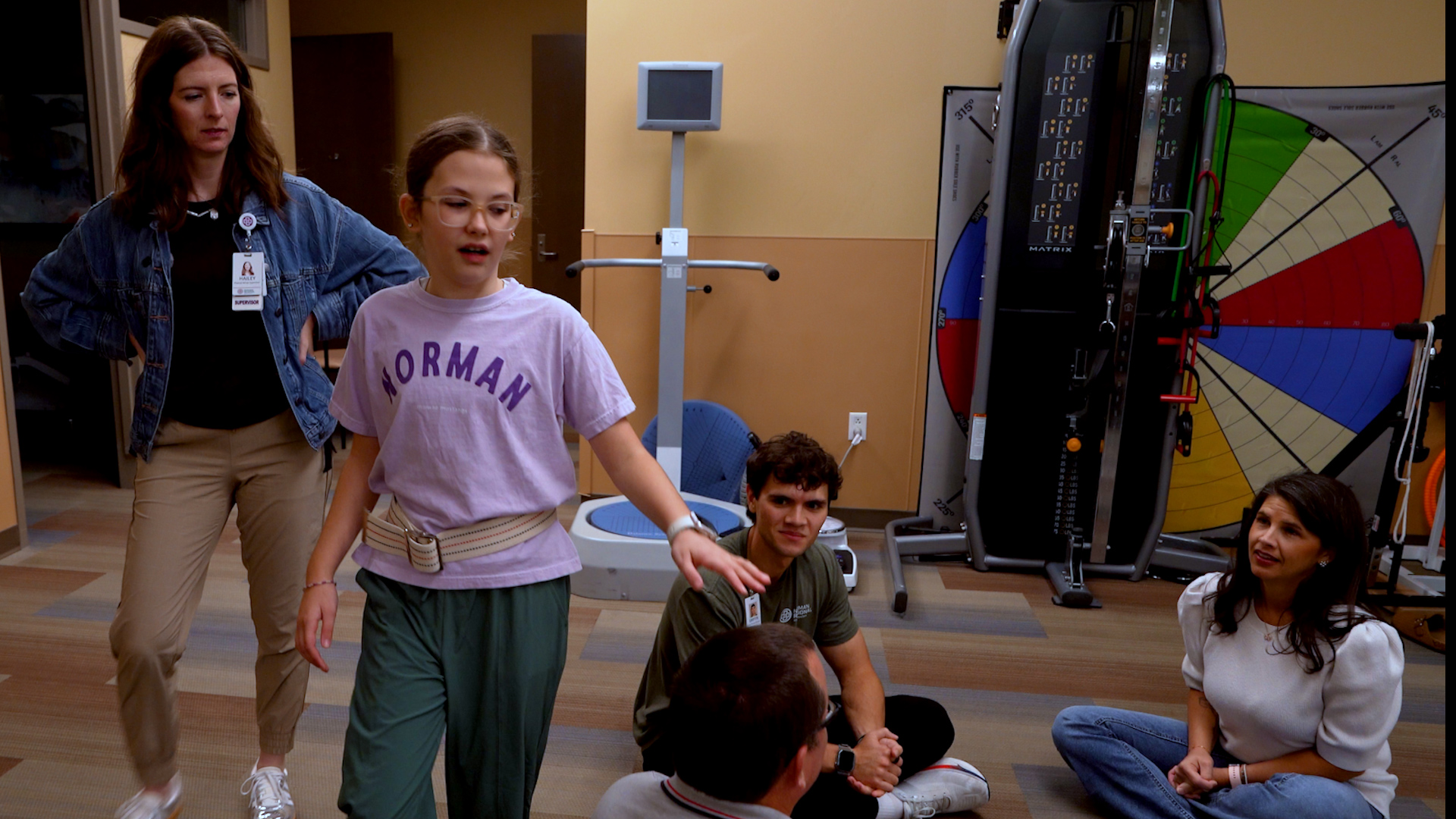
Getting Back to Being an 11-year-old
After seven months of various therapies multiple times a week, Hailey sat down to have a conversation with Amelia and her family.
“We had a conversation about whether she wanted to continue with physical therapy or if she wanted to just go do “kid things”. I don’t want her life to feel like it is all therapy because she’s been through a lot,” said Blevins.
Together, they decided that they would reduce their sessions to once per week while Amelia’s “homework” would be picking out a new activity to do.
“She can still benefit from therapy, but would it be better for her if she just goes and takes a dance class or something like that so she’s with age related peers, having those interactions and she’s still going to learn regardless,” Blevins said.
“I’m just so thankful,” said Amelia. “Not that I don’t like it here but I want to be back to what a normal 11-year-old is doing.”
For More Information
AVM is difficult to diagnose before a stroke so it is important to know the signs of stroke and call 911 immediately if you believe someone is having a stroke.
RELATED BLOG: Could You Recognize a Stroke?
If you are struggling to do something you enjoy or with basic functionality, consult your primary care physician about outpatient rehabilitation or call 405-515-HEAL for more information. To learn more about Norman Regional Outpatient Rehab, click here.
.png)