Norman Regional's team of highly-skilled Internationally Board-Certified
Lactation Consultants (IBCLCs) work with each mom to help reach her newborn's
feeding goals. This team works alongside families to offer a variety of
support from verbal, written, and/or hands-on based on patient preference.
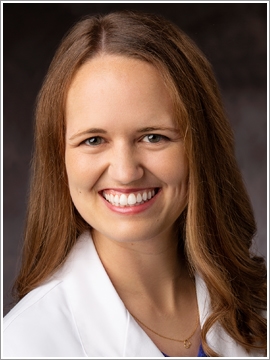
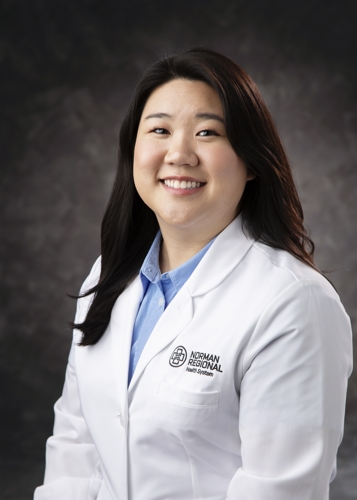
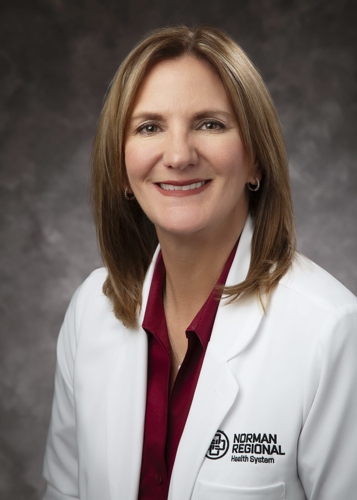
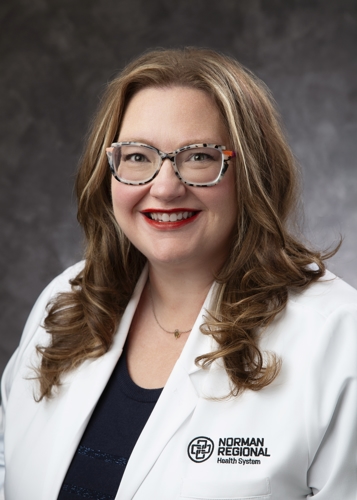
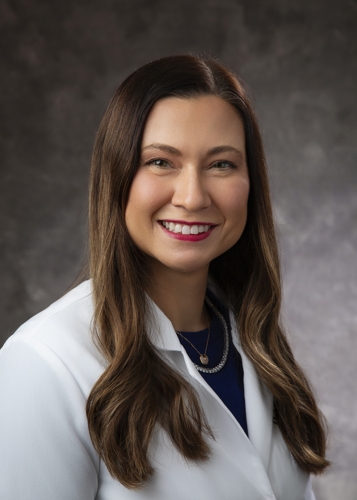
The international board-certified lactationteam includes:
After your baby is born, your milk should come in about three to five days
after delivery. Mothers who have had a C-section will find that their
milk is delayed coming in by at least one day.
For the best health outcomes, the
American Academy of Pediatrics (AAP) recommends exclusive breastfeeding for approximately six months followed
by continued breastfeeding with complementary foods for at least two years
and beyond as mutually desired.
How often should you breastfeed?
The first few days
Your newborn’s stomach is quite small, so they don't need much milk
at each feeding to feel satisfied.
Your baby might want to eat every one to three hours, and frequent feedings
can help boost your milk supply while giving your baby practice with sucking
and swallowing.
If baby is sleepy, wake baby to feed by unwrapping baby, changing the diaper
and placing baby skin-to-skin.
You might even hear your baby sucking and swallowing the milk.
The first few weeks and months
Milk production is regulated by supply and demand. Frequent feedings that
empty your breasts help you make more milk.
According to the
CDC, over the first few weeks and months, the time between feedings will start
to get longer.
On average, according to the
CDC, most exclusively breastfed babies will feed about every two to four hours.
Some babies may feed as often as every hour at times, often called cluster
feeding. Or they may have a longer sleep interval of four to five hours.
Some feeding sessions may be long, and others short. That is okay. Babies
will generally take what they need at each feeding and stop eating when
they are full.
Your baby will breastfeed about 8 to 12 times in 24 hours.
Click to view our online and in-person baby classes, which include breastfeeding classes.
How long is a feeding?
When your milk is in, breastfeed baby on one side until baby falls asleep
or unlatches, and then burp baby and offer them the second side. Start
on the last side or side not fed on the next feeding.
Every baby is different but, in general, feedings will last 15 to 45 minutes.
It is important that baby gulps and swallows on one side for at least 15 minutes.
You cannot overfeed a breastfed baby, and if baby seems hungry, offer the breast.
When are baby growth spurts?
It is common for all babies to have growth spurts, which usually occur around:
Seven to 14 days
Four to six weeks
Three to four months
Six months
Nine months
Baby growth spurts usually last two to three days, but can last about a
week. Babies will feed more frequently during this time.
Breastfeeding tips
It is normal for your baby to feed inconsistently for the first 24 hours.
Continue to attempt to feed them.
Hold your baby skin-to-skin often during your hospital stay.
Offer a feeding every two to three hours.
Choosing to share a room with your newborn can help you respond to your
baby’s hunger signs and breastfeed frequently, which helps boost
your milk supply.
Watch for
feeding cues from your baby such as rooting, hand-to-mouth movements and times when
baby is quiet and alert.
Crying is a late sign of hunger.
Colostrum is produced before and during your first few days after delivery.
It may be clear or have a yellow tint. Sometimes it is referred to as
“liquid gold” because it is packed full of nutritional benefits
including proteins, carbohydrates, vitamins, minerals and disease-fighting
antibodies. Colostrum transitions to breastmilk and digests in about 1.5
hours, so baby may demonstrate hunger cues earlier than three hours.
Breastfed babies cannot be overfed. Feed your baby on demand.
Alternate breasts every feeding. If the baby nurses longer than 20 to 30
minutes, it is okay to switch sides.
The wider and deeper the latch, the more colostrum/breastmilk is transferred
and the more comfortable breastfeeding will be for mom.
Ask for help with positioning and latching your baby to the breast as needed.
Football and cross cradle are the best positions for newborns.
Avoid pacifiers and artificial nipples for the first three to four weeks.
Outpatient Lactation Services
Breastfeeding is very important to us at Norman Regional, which is why
our team is available seven days a week. If you need additional help once
you and your baby are home, please don’t hesitate to call us at
405-515-3532. We will schedule a time to sit down with you and your baby and provide
hands-on help to alleviate the stress or confusion you’re experiencing.
As part of the visit, we will weigh your baby before and after a feeding
to ensure they are getting the breast milk they need. A doctor’s
order is required for most insurance to cover the visit. Orders for the
visit can be faxed by your OB or your baby's pediatrician to 405-515-3147.
Norman Regional is one of the only hospitals in Oklahoma with Advanced
Perinatal Certification with exclusive breastfeeding rates, consistently
exceeding the national benchmark.
The goal of our Lactation Services department is to support our mothers'
decisions to breastfeed, not only while in the hospital, but also for
AT LEAST the baby's first six months. (As recommended by the CDC, AAP, and WHO)
We offer outpatient lactation consultations provided by our International
Board Certified Lactation Consultants (IBCLC).
Whether you delivered here at Norman Regional, with a midwife, or at another
surrounding hospital, we are here to ensure that ALL mothers who wish
to breastfeed have the help, resources and support needed to meet their goals.
A newly renovated, spacious, lactation office at Norman Regional Hospital
located at 3300 HealthPlex Parkway in Norman, OK, was recently unveiled.
The office is easily accessible, right outside the elevators on the Labor
and Delivery floor. Please enter through the Pavilion Entrance.
Our Lactation Consultants offer one-on-one consultations with a minimum
one-hour appointment time.
Breastfeeding help
Norman Regional Hospital Lactation Services –
405-515-3532

 View Profile



7-31.jpg)